GEO Agency

How a GEO Agency Redefines AEO and SEO for the Generative Search Era

What is a GEO Agency and How Does It Differ from Traditional SEO and AEO?

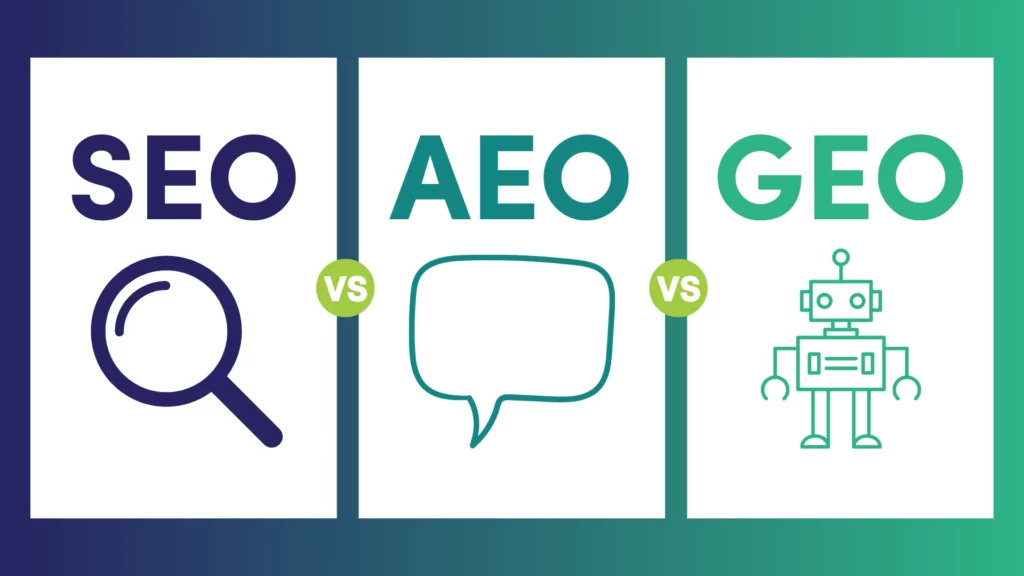
A GEO agency specializes in Generative Engine Optimization—optimizing brand visibility within AI-generated responses produced by large language models like ChatGPT, Google’s Search Generative Experience (SGE), Perplexity, and Claude. These agencies focus on ensuring AI systems correctly understand, reference, and cite a brand’s content when synthesizing answers for users.

The GEO agency definition centers on a fundamental shift in how content reaches audiences. Traditional SEO relies on keyword-based ranking strategies, backlink profiles, and user engagement metrics to secure positions on search engine results pages. GEO agencies work differently—they optimize for how AI crawlers interpret content and how generative models incorporate that information into synthesized knowledge outputs.

Key Differences Between Traditional SEO and GEO

Traditional SEO vs GEO reveals stark operational differences:

  • SEO: Targets ranking positions through keywords, meta tags, and link building
  • GEO: Influences AI comprehension through structured content, semantic markup, and E-E-A-T signals
  • SEO: Measures success by page rankings and click-through rates
  • GEO: Tracks brand mentions within AI-generated responses across multiple platforms

The Role of AEO Optimization

AEO optimization serves as a bridge between these approaches. Answer Engine Optimization specifically targets featured snippets and AI overviews—the boxed answers appearing at the top of search results. AEO focuses on concise, direct answers to specific queries.

The Expansion of GEO Beyond AEO

GEO expands beyond this narrow scope. While AEO aims for a single featured snippet, GEO agencies work to embed brand authority across the broader knowledge synthesis performed by generative AI tools. This means appearing in conversational AI responses, voice assistant answers, and multi-source synthesized outputs that combine information from numerous sources into coherent narratives.

The distinction matters because AI-powered answer engines don’t simply extract snippets—they generate new content by understanding context, synthesizing multiple perspectives, and creating personalized responses based on nuanced, conversational queries.

Why Is the Generative Search Era Changing the Optimization Landscape?

The generative search era represents a fundamental shift where AI systems synthesize information from multiple sources to create original responses rather than simply ranking existing web pages. This transformation disrupts decades of search engine optimization built around link equity and keyword placement.

Search behavior now bypasses the traditional “10 blue links” model. Users increasingly receive direct answers from AI platforms like ChatGPT, Google’s Search Generative Experience (SGE), Perplexity, and Claude without clicking through to source websites. Gartner research predicts a 25% reduction in traditional search engine traffic by 2026 as AI-powered search adoption accelerates. This means brands can no longer rely solely on backlink profiles and domain authority to capture visibility.

How Large Language Models Transform Search Behavior

LLMs process queries differently than traditional search algorithms:

  • They interpret conversational, context-rich questions spanning 20-50 words instead of 2-3 keyword phrases
  • They synthesize information across multiple sources to generate coherent, personalized answers
  • They prioritize content structure and semantic meaning over keyword density
  • They evaluate expertise signals and trustworthiness markers embedded within content

The AI-powered search evolution changes what “ranking” means. Instead of competing for position #1 on a results page, brands must optimize to be cited and referenced within AI-generated knowledge synthesis. Google SGE, for example, pulls information from 5-10 sources to construct each response, creating new competition dynamics where multiple brands can gain visibility within a single answer.

This paradigm shift requires optimization strategies that help AI systems understand, extract, and attribute information correctly—the core mission of GEO agencies navigating the generative search era impact. To adapt to this new landscape, a comprehensive AI search optimization strategy is essential.

How Do GEO Agencies Optimize Content for Generative AI Platforms?

Content optimization for generative AI begins with question-based keyword research that mirrors how users interact with AI chatbots and virtual assistants. GEO agencies analyze conversational query patterns—typically longer, more specific questions than traditional keyword searches—to identify the exact phrasing and context that triggers AI-generated responses. This research uncovers the natural language patterns that large language models recognize and prioritize when synthesizing answers.

Structuring Content for Machine Comprehension

Semantic HTML for AI forms the backbone of GEO content architecture. Agencies structure articles with hierarchical heading tags (H1-H3) that create clear information pathways for AI crawlers to follow. Each heading answers a specific question, with supporting content organized in short paragraphs under 80 words that AI systems can easily parse and extract.

Key structural elements include:

  • Mini tables of contents for longer articles that help AI identify relevant sections quickly
  • FAQ sections marked with schema.org/FAQPage markup to signal question-answer pairs
  • Semantic tags like <strong> and <em> to emphasize important concepts
  • Ordered and unordered lists that break down complex information into digestible chunks

Implementing Structured Data Protocols

Structured data for AI understanding enables precise information extraction by generative platforms. GEO agencies implement Article markup to define content type, authorship, and publication dates. FAQ schema explicitly labels questions and their corresponding answers, making it effortless for AI models to identify authoritative responses. This machine-readable formatting ensures that when ChatGPT, Google SGE, or Perplexity synthesizes an answer, they can accurately attribute information to the source while maintaining context and meaning.

What Technical Strategies Do GEO Agencies Implement to Enhance Crawlability and Performance?

GEO agencies prioritize crawler access control to ensure AI systems can efficiently discover and interpret content. This begins with managing specialized directives through robots.txt and the emerging llms.txt files, which explicitly guide AI crawlers on which pages to index and how to process them. Unlike traditional search bots, LLM crawlers require clear signals about content priority and access permissions to build accurate knowledge representations.

The llms.txt file represents a new standard specifically designed for AI training data collection. GEO agencies configure these files to:

  • Specify which content sections are most valuable for AI synthesis
  • Indicate preferred citation formats for brand references
  • Control access to proprietary information versus publicly shareable knowledge
  • Define crawl rates that balance visibility with server performance

Site speed optimization becomes critical as AI crawlers evaluate content quality partly through performance metrics. GEO agencies implement aggressive caching strategies, compress images using next-generation formats like WebP, and leverage content delivery networks (CDNs) to reduce latency across geographic regions.

JavaScript presents a significant barrier to AI crawlability. Many LLM crawlers struggle with client-side rendering, missing content hidden behind JavaScript execution. GEO agencies address this by:

  • Converting dynamic JavaScript elements to server-side rendered HTML
  • Implementing progressive enhancement where core content loads without JavaScript dependencies
  • Using static site generation for content-heavy pages
  • Ensuring critical text remains accessible in the initial HTML payload

Performance monitoring extends beyond traditional metrics. GEO agencies track Core Web Vitals while simultaneously measuring how quickly AI crawlers can parse page structure. They audit mobile responsiveness since many AI assistants operate on mobile-first platforms, ensuring content adapts seamlessly across devices without sacrificing semantic clarity or structural integrity that AI systems depend on for accurate information extraction.

GEO Agency

How Do GEO Agencies Maintain Brand Consistency Across Evolving AI Search Platforms?

1. Establishing Unified Content Standards

Brand governance in GEO requires establishing unified content standards that AI systems can reliably recognize and reproduce. GEO agencies implement centralized style guides that define terminology, voice patterns, and messaging frameworks across every digital touchpoint where generative AI might encounter brand content.

2. Applying the E-E-A-T Framework

The E-E-A-T framework application becomes the foundation for this consistency work. Agencies audit existing content to ensure every piece demonstrates:

  • Expertise through detailed explanations backed by data and research
  • Experience via first-hand accounts, case studies, and practical examples
  • Authority established through author credentials, citations, and industry recognition
  • Trustworthiness reinforced by transparent sourcing, regular updates, and clear contact information

This focus on E-E-A-T is crucial as it also plays a role in guiding authorship expertise which directly impacts SEO performance. A deeper understanding of how E-E-A-T is guiding authorship expertise and SEO can further enhance the effectiveness of these strategies.

3. Understanding AI Models

AI models synthesize information from multiple sources before generating responses. When a brand’s messaging varies across platforms—using different product names on social media versus the website, or inconsistent service descriptions across blog posts—LLMs struggle to form coherent representations. This fragmentation dilutes brand presence in AI-generated answers.

4. Creating Content Templates

GEO agencies create content templates that maintain structural consistency while allowing creative flexibility. These templates ensure that key brand terms appear in predictable patterns, making it easier for AI systems to identify authoritative sources. The agency might standardize how product features are described, how company history is presented, or how customer problems are framed across all content channels.

5. Conducting Regular Content Audits

Regular content audits identify inconsistencies that could confuse AI crawlers. Agencies track how brand information appears in AI responses, then trace discrepancies back to conflicting source content. This feedback loop enables continuous refinement of brand messaging to align with how generative platforms actually interpret and cite the brand.

6. Focusing on Author Profiles

Author profiles receive particular attention, as AI systems increasingly evaluate content credibility through contributor expertise. Agencies ensure author bios remain current, detailed, and linked across platforms to strengthen the expertise signals that influence AI citation decisions.

How Do GEO Agencies Measure Performance in Generative AI Environments?

GEO agencies use generative AI analytics tools to track how often and in what context brands appear within AI-generated responses. These specialized platforms monitor citations, sentiment, and positioning across multiple AI systems including ChatGPT, Perplexity, Google SGE, and Claude—providing visibility that traditional analytics cannot capture.

Why Traditional SEO Metrics Aren’t Enough

Brand visibility tracking in AI answers requires fundamentally different metrics than conventional SEO. Instead of monitoring page rankings or click-through rates, GEO agencies measure:

  1. Citation frequency: How often AI systems reference the brand when answering relevant queries
  2. Answer positioning: Whether the brand appears in primary answers versus supplementary context
  3. Source attribution accuracy: If AI platforms correctly attribute information to the brand
  4. Sentiment analysis: The tone and context in which the brand is mentioned within synthesized responses
  5. Query coverage: The breadth of topics where the brand appears as an authoritative source

How Agencies Gather Data

These tools use API integrations with AI platforms where available, combined with systematic query testing across hundreds of relevant prompts. Agencies create query matrices that reflect actual user conversations—tracking how brands perform across different question types, contexts, and AI platforms.

What the Data Reveals

Real-time dashboards visualize brand presence patterns, identifying which content pieces AI systems favor and which knowledge gaps exist. This data reveals opportunities to strengthen authority in specific topic areas or adjust content structure for better AI comprehension.

Staying Ahead with Proactive Monitoring

Some agencies develop proprietary monitoring systems that automatically test brand visibility across rotating query sets, generating alerts when citation patterns shift. This proactive approach helps brands respond quickly to changes in how AI systems interpret and reference their content. Visit https://happyhamstercomputers.com/how-businesses-can-leverage-geo-and-aeo-strategies-to-dominate-ai-generated-results/ to get how businesses can leverage GEO and AEO strategies to dominate AI-generated results.

Understanding the Competition

The measurement framework also includes competitive analysis, showing how rival brands appear in similar AI-generated answers. This comparative intelligence guides strategic content investments and identifies white space opportunities where brands can establish stronger AI visibility.

Conclusion

The generative search era demands a fundamental rethinking of digital visibility strategies. Brands that continue relying solely on traditional SEO tactics risk becoming invisible in AI-generated responses that increasingly shape consumer decisions and information discovery.

A GEO agency redefines AEO and SEO by bridging the gap between conventional optimization and the requirements of large language models. This integration creates a resilient strategy that maintains visibility across traditional search engines, featured snippets, and AI-synthesized answers.

The shift isn’t temporary—AI-powered search experiences are rapidly becoming the default interface for information retrieval. Organizations that invest in GEO capabilities now position themselves to capture attention in this transformed landscape, where being cited by AI systems matters as much as ranking on page one.

Adapting to generative search means embracing structured content, semantic clarity, and brand consistency as foundational elements rather than optional enhancements. The question isn’t whether to optimize for AI platforms, but how quickly your brand can evolve to meet this new reality.

hire AEO agency

How Businesses Can Leverage GEO and AEO Strategies to Dominate AI-Generated Results

What Are GEO and AEO Strategies and Why Do They Matter in the Age of AI?

Generative Engine Optimization (GEO) prepares content for AI-driven search engines and language models by creating comprehensive, semantically rich material that AI systems can interpret and cite. Answer Engine Optimization (AEO) transforms content into direct answers for voice assistants, chatbots, and AI-powered tools through structured data and conversational formats.

These strategies matter because AI-generated search results are reshaping how users discover information. Traditional SEO alone no longer guarantees visibility when AI platforms like Google SGE and Bing AI curate responses without directing users to websites. Businesses risk becoming invisible if their content isn’t optimized for AI interpretation.

The digital marketing evolution demands adaptation. Companies implementing GEO strategies build topical authority through pillar pages and expert content clusters. Those leveraging AEO strategies capture voice search traffic and zero-click searches through FAQ sections and schema markup. To stay ahead in this changing landscape, many businesses choose to hire AEO agency experts who understand how to structure content for AI-driven search results. Without these approaches, businesses surrender competitive advantage to rivals who recognize how AI prioritizes authoritative, structured, and conversational content.

How Can Businesses Optimize for Generative Engines (GEO) to Improve Their Search Visibility?

Generative engine optimization targets AI language models like ChatGPT, Google’s SGE, and Bing AI by structuring content in ways these systems can easily parse, understand, and cite. Unlike traditional search engines that rank pages, generative engines synthesize information from multiple sources to create comprehensive responses, making it essential for businesses to position their content as the authoritative source AI models reference.

1. Aligning with User Intent

User intent alignment forms the foundation of successful GEO implementation. AI models prioritize content that directly addresses specific user needs rather than keyword-stuffed pages. Businesses should analyze the questions their audience asks and create content that provides complete, actionable answers. A software company, for example, might develop content addressing “how to integrate payment APIs” rather than simply targeting “payment API” as a keyword.

2. Establishing Topical Authority

Topic clusters establish topical authority by organizing related content around central themes. This structure helps AI models understand the depth of expertise a business offers. Creating a pillar page on “cloud security” with supporting articles on encryption methods, compliance standards, and threat detection signals comprehensive knowledge that generative engines value.

3. Enhancing AI Interpretation

Semantic content enhances AI interpretation by using natural language patterns, contextual relationships, and entity-based writing. Instead of repetitive keyword usage, businesses should incorporate synonyms, related concepts, and industry terminology that AI models recognize. Writing “customer relationship management platforms help sales teams track interactions and nurture leads” provides richer semantic signals than simply repeating “CRM software” throughout the text.

4. Increasing Trustworthiness through Authoritative Content

Authoritative content backed by data, expert insights, and credible sources increases the likelihood of AI citation. Including statistics, case studies, and original research positions content as trustworthy information that generative engines can confidently reference when answering user queries.

What Are Practical Tactics Businesses Can Use to Implement GEO Effectively?

Building Topical Authority

Topical authority building starts with creating comprehensive pillar pages that serve as authoritative hubs for broad topics within your industry. These pages should contain 2,000+ words of in-depth analysis, covering every angle of a subject while linking to supporting cluster content that explores specific subtopics. A SaaS company might build a pillar page on “Customer Retention Strategies” that connects to detailed articles on churn analysis, onboarding optimization, and loyalty programs.

Creating Expert Content Clusters

Supporting this structure requires publishing expert content clusters consistently—aim for 3-5 related articles per month that reference and strengthen your pillar content. Each cluster piece should demonstrate specialized knowledge through case studies, data-driven insights, and practical frameworks that AI models can extract and cite as authoritative sources.

Improving Engagement Metrics

Engagement metrics directly influence how AI systems evaluate content quality and relevance. AI models interpret high click-through rates and extended dwell time as signals that your content satisfies user intent. To boost these metrics:

  • Craft compelling meta descriptions that promise specific value
  • Use descriptive, benefit-focused headlines that match search intent
  • Structure content with scannable subheadings and visual breaks
  • Include interactive elements like calculators or assessment tools
  • Embed relevant videos that encourage longer page visits

Enhancing Semantic Optimization

Semantic optimization requires moving beyond keyword density to contextual relevance. Use entity-based language that connects related concepts—instead of repeating “email marketing,” incorporate related terms like “campaign automation,” “subscriber segmentation,” and “deliverability optimization.” This semantic richness helps AI models understand the full scope of your expertise.

Aligning with Natural Language Patterns

Implement natural language patterns that mirror how users actually ask questions. Replace formal business jargon with conversational phrasing: “How do I reduce cart abandonment?” rather than “Cart abandonment reduction methodologies.” This alignment with query patterns increases the likelihood of AI systems selecting your content for generated responses.

How Answer Engine Optimization (AEO) Improves User Experience and Strategies for Businesses to Optimize Content

Answer engine optimization transforms traditional search engines into direct answer providers, delivering immediate, precise responses through AI-powered tools like voice assistants and chatbots. This approach eliminates the need for users to click through multiple results, creating a frictionless experience that meets information needs instantly. The shift toward zero-click searches means businesses must position their content as the authoritative source AI systems pull from when generating responses.

1. Implementing Structured Data

Schema markup serves as the backbone of effective AEO strategy. This code helps AI systems understand content context, relationships, and meaning with precision. Businesses implementing structured data for FAQs, products, reviews, and how-to content see dramatic improvements in visibility across AI-generated results.

Key schema types for AEO include:

  • FAQ Schema: Structures question-and-answer pairs for direct extraction by voice assistants
  • HowTo Schema: Breaks down step-by-step instructions into machine-readable formats
  • Product Schema: Enables AI to surface pricing, availability, and specifications instantly
  • Review Schema: Displays ratings and testimonials in response to evaluative queries

2. Creating Content Formats That Drive AEO Success

AI systems favor content organized for conversational queries. Q&A sections mirror natural speech patterns, making them ideal for voice search optimization. How-to guides with clear, numbered steps allow AI to extract and recite instructions verbatim. FAQ pages addressing specific user questions become prime candidates for featured responses.

The language style matters significantly. Concise answers using natural, conversational tone align with how people interact with voice assistants. Businesses should craft responses that sound authentic when read aloud, avoiding jargon or overly complex sentence structures. Each answer should stand alone as a complete thought, typically ranging from 40-60 words for optimal AI extraction.

Which Industries Benefit Most from Leveraging GEO and AEO Strategies?

1. E-commerce Optimization

E-commerce optimization thrives when businesses implement geo-targeted keywords to capture local search intent. Online retailers using GEO strategies optimize product pages with location-specific terms like “organic coffee beans in Portland” to appear in AI-generated shopping recommendations. These businesses create comprehensive product guides and comparison content that AI models reference when answering purchase-related queries.

2. SaaS Digital Marketing

SaaS digital marketing teams leverage FAQ-driven AEO strategies to transform customer support documentation into searchable answer formats. Software companies structure their knowledge bases with schema markup, enabling AI assistants to pull precise troubleshooting steps and feature explanations. This approach reduces support ticket volume while improving user satisfaction through instant, accurate responses. You may like to visit https://business.gov.au/online-and-digital/develop-your-digital-strategy to get more about develping your digital strategy.

3. Healthcare SEO Strategies

Healthcare SEO strategies combine both approaches by optimizing symptom checkers and treatment guides for AI interpretation. Medical practices use GEO to establish topical authority around specific conditions while implementing AEO-friendly Q&A formats that voice assistants can cite. Local clinics particularly benefit from geo-specific health content that answers “near me” queries through AI-powered search results.

hire AEO agency

Semantic search evolution is changing how AI engines understand content, moving beyond just matching keywords. Now, modern AI systems can analyze context, relationships between concepts, and user intent with incredible accuracy. This means businesses need to organize their content around covering entire topics instead of just focusing on individual keywords.

The rise of screenless browsing trends through smart speakers and voice assistants is making AEO optimization even more important. Voice searches usually have 3-5 more words than text searches and follow natural conversation patterns. As a result, content needs to directly answer questions asked in everyday language.

AI engines are increasingly focusing on:

  • Entity-based understanding that connects related concepts across your content ecosystem
  • Natural language processing capabilities that favor conversational, question-answer formats
  • Zero-click results where AI provides complete answers without requiring users to visit websites

To keep up with these changes, businesses must create content that AI can easily extract, combine, and present as authoritative answers. This involves organizing information in a clear hierarchy, using headings that pose questions, and providing concise yet comprehensive responses that AI systems can confidently reference.

Read more about how a GEO agency redefines AEO and SEO for the generative search era.

How Can Businesses Ensure Long-Term Success with Their GEO and AEO Efforts?

Content freshness determines whether AI systems prioritize your information over competitors. AI-driven search engines favor recently updated content, making regular refreshes with current data, statistics, and insights essential for maintaining visibility in generative results.

Businesses must audit their content quarterly, updating outdated information and adding new developments in their industry. This practice signals to AI engines that your content remains authoritative and trustworthy.

Natural language updates transform how content resonates with AI interpretation. Shifting from keyword-stuffed text to conversational phrasing mirrors how users interact with voice assistants and chatbots. Write as if answering a colleague’s question rather than optimizing for search algorithms.

Key maintenance practices include:

  • Revising content to match current conversational query patterns
  • Incorporating long-tail questions users actually ask
  • Testing content against voice search devices
  • Monitoring AI-generated summaries featuring your brand

This dual focus on freshness and natural language positions businesses to dominate AI-generated results across evolving platforms.

SEO Agency

The Complete Guide to Working with an SEO Agency Successfully

Introduction

In 2025, the world of digital marketing has become more competitive than ever. With the rise of Google AI Overviews, frequent algorithm changes, and new AI-driven search experiences, businesses can’t afford to rely on outdated SEO tactics. Ranking on Google now requires a combination of authority, trust, and a forward-thinking strategy.

That’s where a professional SEO agency comes in. Partnering with the right agency can transform your online presence, but success doesn’t happen automatically. It requires collaboration, clear communication, and a shared vision. This guide walks you through everything you need to know to work with an SEO agency effectively and get the most out of your investment.


The Changing Digital Landscape in 2025

Search is evolving fast. Instead of typing in simple keywords, users now ask detailed questions, and Google delivers AI-generated summaries alongside traditional results. Businesses are not just competing with each other—they’re competing with how AI chooses to present information.

This makes digital marketing in 2025 both challenging and exciting. A strong SEO strategy ensures your content isn’t lost in the noise but instead appears in AI summaries, featured snippets, and local search packs. To achieve this, working closely with an experienced agency is key.

See more: How Automated Temperature Monitoring Reduces Food Safety Risks


Expertise That In-House Teams Often Lack

Many small businesses try to handle SEO internally. While in-house teams may manage blog posts or social media, they usually lack the depth of skills needed for long-term SEO success. Modern SEO requires expertise in technical audits, content structuring, backlink acquisition, and data-driven strategy.

An SEO agency brings together a team of specialists. For example, while your in-house team might write articles, the agency ensures they’re optimized with schema markup, search intent analysis, and structure that increases the chances of appearing in Google AI Overviews. This level of expertise is difficult to achieve without external support.


Access to the Latest Tools and Analytics

SEO success isn’t built on guesswork—it’s built on data. Agencies invest in expensive tools like Ahrefs, SEMrush, and enterprise-level AI analytics platforms. These tools track competitor rankings, uncover keyword opportunities, and monitor backlinks.

Most small businesses can’t justify these costs, but by working with an agency, you gain access to insights that would otherwise be out of reach. For example, agencies can identify rising search trends in your industry and quickly adjust content strategies so you capture customers before competitors do.


Saving Time and Resources

Running a business already demands your full attention. Between managing staff, serving customers, and handling daily operations, SEO often gets pushed to the backburner. Yet SEO requires consistency—regular updates, monitoring, and optimization.

Outsourcing to an agency saves time and ensures ongoing progress. Instead of worrying about ranking reports or broken links, you can focus on growing your business while your agency takes care of the technical and strategic work. Think of it as adding a specialized department to your business without the overhead.


 SEO Agency

Better ROI with Professional Strategies

One of the biggest mistakes businesses make is focusing only on traffic. Getting visitors to your site is important, but conversions are what truly matter. An SEO agency uses professional SEO strategies that focus on turning clicks into customers.

For instance, an e-commerce store may have a blog post about “best running shoes in 2025.” On its own, it brings traffic. But an agency ensures that post links strategically to product pages, includes buyer-focused content, and encourages purchases. This results in real ROI—not just higher page views.


Staying Ahead of Competitors

Your competitors are constantly working to improve their SEO. If you’re standing still, you’re falling behind. Agencies help you stay ahead by monitoring competitors, analyzing their strategies, and adapting quickly to changes in the market.

For example, if a competitor earns backlinks from an industry blog, your agency might pitch thought leadership content to the same or similar outlets. By being proactive, agencies make sure you’re not just reacting but leading the competition.


Future-Proofing Your SEO with AI Overviews

The rise of Google AI Overviews has changed how visibility works online. These summaries highlight authoritative content and reduce the number of clicks to individual websites. Being included in these overviews gives your business credibility and massive exposure.

Agencies know how to optimize content for AI inclusion. They create structured articles, FAQ sections, and authoritative resources that increase the chances of your brand being pulled into AI-driven results. Imagine a customer searching “best tax tips for small businesses.” If your agency has optimized your content properly, you could be the source Google highlights.


Conclusion

Working with an SEO agency in 2025 is more than outsourcing—it’s about building a partnership that drives growth. Agencies bring expertise, advanced tools, and professional strategies that in-house teams rarely match. They save you time, maximize ROI, and prepare your business for the AI-driven search era.

To succeed, treat your agency as an extension of your business. Communicate openly, set clear goals, and trust their process. With the right collaboration, an SEO agency can take you from simply being found online to being chosen as the go-to authority in your industry.

SEO Agency

The Role of Content in a Winning SEO Strategy

In 2025, content is more than just words on a page—it’s the foundation of any high-performing SEO strategy. But not just any content will cut it. Search engines have evolved, and so have user expectations. To win in today’s search landscape, your content needs to be strategic, user-focused, and built to last.

In this article, we’ll unpack the real role of content in SEO and how it supports everything from keyword rankings and UX to backlinks and trust. We’ll also explore what’s changed, what still works, and what to avoid if you want long-term success in organic search.


Why Content Is Central to Modern SEO

Content is what connects your site to search queries. Without high-quality content, you can’t attract, engage, or convert organic visitors. But content isn’t just about keywords—it’s about delivering real value.

Here’s how content powers your SEO strategy:

  • Matches user intent with relevant solutions
  • Establishes topical authority in your niche
  • Supports internal linking and site structure
  • Attracts backlinks and builds brand awareness
  • Demonstrates EEAT (Experience, Expertise, Authoritativeness, Trust)

Let’s break down how to create content that actually works in 2025.


Crafting Content That Aligns with Search Intent

Google’s algorithms have become incredibly good at interpreting intent. That means your content strategy needs to be built around why someone is searching—not just what they type.

Types of Search Intent:

  • Informational: “What is technical SEO?”
  • Navigational: “Ahrefs pricing page”
  • Transactional: “Buy standing desk online”
  • Commercial Investigation: “Best email marketing tools for small business”

How to align content:

  • Match blog posts with informational queries
  • Create product/service pages for transactional intent
  • Optimize landing pages for commercial comparisons
  • Use FAQ schema to target long-tail questions

Tools like SEMrush, Ahrefs, and AlsoAsked can help you research intent-based queries in your niche.


Content Optimization: Beyond Keywords

In 2025, content optimization is about depth, context, and clarity—not stuffing keywords.

Here’s what works:

  • Use semantically related terms and topics
  • Structure content with clear H2s, bullet points, and summaries
  • Include visual elements (charts, infographics, video)
  • Write naturally—avoid keyword repetition that feels forced

Also, don’t forget to optimize metadata: titles, meta descriptions, and image alt text still play a supporting role in visibility.


How Content Fuels EEAT

EEAT (Experience, Expertise, Authoritativeness, Trustworthiness) has become a core pillar of content evaluation—especially for YMYL (Your Money, Your Life) topics like finance, health, or legal.

To demonstrate EEAT through content:

  • Include author bios with relevant credentials
  • Reference reliable sources with outbound links
  • Update outdated articles regularly
  • Share original insights or case studies
  • Encourage customer reviews, testimonials, and user-generated content

Tip: Add a dedicated “About the Author” or “Editorial Guidelines” section to reinforce transparency and trust.


Internal Linking: Content as SEO Infrastructure

One often overlooked benefit of content is that it helps create a robust internal linking structure. This not only helps users navigate your site—it helps Google crawl and understand your content hierarchy.

seo strategy

Best practices:

  • Use keyword-rich anchor text naturally
  • Link to both top-level and related supporting pages
  • Avoid overloading any single page with outbound internal links
  • Regularly audit your site for orphaned pages

Internal linking is your content’s secret weapon—it builds site authority and improves UX in one move.


Content and Backlinks: Earning, Not Buying

High-quality backlinks remain one of the strongest ranking factors. But in 2025, the best way to earn them is by publishing valuable, original content.

Content Types That Attract Links:

  • Research reports or industry data
  • In-depth guides or “ultimate” tutorials
  • Original infographics or visual breakdowns
  • Expert roundups or interviews
  • Thought leadership and opinion pieces

Digital PR, content outreach, and platforms like HARO (Help a Reporter Out) can help amplify your reach—but none of that works without solid content as the foundation.


UX and Mobile-First: Content Must Serve the User

Even the best content won’t rank if it delivers a poor user experience.

Mobile-First Optimization:

  • Use responsive design with fast load times (under 2.5s)
  • Avoid font sizes or layouts that break on mobile
  • Prioritize thumb-friendly buttons and clean navigation

UX Best Practices:

  • Use scannable content formatting (headers, lists, visuals)
  • Make your content easy to digest with summaries and clear structure
  • Remove intrusive popups or auto-play videos that disrupt reading

Remember: Google evaluates content based on how users interact with it. Good UX = better engagement = higher rankings.


Outdated Content Tactics That No Longer Work

Avoid these techniques if you want to future-proof your SEO strategy:

  • Keyword stuffing: It reads poorly and gets flagged
  • Clickbait titles with weak content: High bounce rates hurt your credibility
  • Spun or AI-only content: Google’s getting better at identifying low-effort AI text
  • Exact-match domains and over-optimized URLs: These no longer give you an edge
  • Duplicate content across pages: Especially harmful for large sites

In short, if your content doesn’t offer unique value, it’s not going to rank.

releated:TYPES OF STRATEGIES SEO AGENCY OFFER


Actionable Content Checklist for SEO in 2025

✅ Define the target search intent before writing
✅ Use semantic keywords and structured formatting
✅ Write content with depth, clarity, and visual support
✅ Link internally to relevant pages
✅ Cite trustworthy sources and demonstrate expertise
✅ Optimize for mobile and UX-first experiences
✅ Keep content up to date
✅ Promote content through outreach, PR, and social channels
✅ Avoid keyword stuffing, duplicate text, or AI spam
✅ Track performance via Google Search Console and GA4


Final Thoughts

Content isn’t just part of SEO—it is SEO. In 2025, content must be intentional, user-focused, and built for long-term authority. When you create content that solves real problems, earns trust, and provides genuine value, search engines will reward you—and so will your audience.

If you’re serious about winning in SEO this year, make content the core of your strategy. Not as an afterthought, but as the driving force behind visibility, traffic, and trust.

Food safety audits

Preparing for Food Safety Audits with the Right Compliance Tools

In the food industry, ensuring safety and compliance is paramount. As regulations become increasingly stringent, food businesses must be prepared for audits that assess their adherence to safety standards. The right compliance tools can streamline this process, making it easier to maintain high standards and pass inspections. This article explores the essential aspects of preparing for food safety audits and how compliance tools can facilitate this crucial task.

The Importance of Food Safety Audits

Food safety audits serve as a critical checkpoint for businesses in the food supply chain. These audits not only evaluate compliance with local and international regulations but also assess the effectiveness of a company’s food safety management system.

Ensuring Consumer Safety

At the heart of food safety audits is the primary goal of protecting consumers. By ensuring that food products are safe for consumption, businesses help prevent foodborne illnesses, which can have severe health implications. Regular audits allow companies to identify potential hazards and rectify them before they escalate into serious issues. Furthermore, these audits often involve a thorough examination of food handling practices, storage conditions, and employee training, ensuring that every aspect of the food production process adheres to the highest safety standards. This proactive approach not only safeguards public health but also contributes to a culture of accountability within the organisation.

Maintaining Brand Reputation

A food safety audit can significantly impact a company’s reputation. A successful audit demonstrates a commitment to quality and safety, fostering consumer trust. Conversely, failing an audit can lead to negative publicity and loss of customer confidence. In today’s digital age, where information spreads rapidly, the repercussions of a poor audit can be long-lasting. Companies that consistently pass their audits often find themselves at a competitive advantage, as consumers are increasingly inclined to choose brands that prioritise safety and transparency. Additionally, many retailers and distributors require proof of compliance through regular audits before they will partner with a supplier, making these assessments not only beneficial but essential for business growth and sustainability.

Understanding Compliance Tools

Compliance tools are essential for managing the complexities of food safety audits. These tools encompass a range of software and systems designed to help businesses adhere to regulatory requirements and streamline the audit process. As food safety regulations continue to evolve, the importance of these tools cannot be overstated, as they play a pivotal role in safeguarding public health and maintaining consumer trust.

Types of Compliance Tools

There are various types of compliance tools available, each serving a unique purpose. Some of the most common include:

  • Document Management Systems: These tools help businesses organise and store essential documents, such as safety protocols and training records, ensuring easy access during audits. They often come equipped with version control features, allowing companies to track changes and maintain an accurate historical record of compliance documentation.
  • Audit Management Software: This software facilitates the planning, execution, and reporting of audits, allowing businesses to track compliance and identify areas for improvement. With features like automated scheduling and customisable reporting, these tools can significantly enhance the efficiency of the audit process.
  • Training Management Systems: These systems ensure that all employees are adequately trained in food safety practices, a crucial aspect of compliance. They often include e-learning modules, assessments, and tracking capabilities to ensure that training is both effective and up-to-date.

Benefits of Using Compliance Tools

Utilising compliance tools offers several advantages that can enhance a company’s readiness for food safety audits. These benefits include:

  • Increased Efficiency: Automation of compliance processes reduces the time spent on manual tasks, allowing staff to focus on core business operations. This efficiency not only boosts productivity but also helps in reallocating resources to areas that require more attention, such as customer service or product innovation.
  • Improved Accuracy: Compliance tools minimise human error by standardising procedures and providing clear guidelines for employees. The integration of checklists and reminders within these tools ensures that critical tasks are not overlooked, thereby enhancing overall operational integrity.
  • Real-time Monitoring: Many compliance tools offer real-time data tracking, enabling businesses to identify and address potential issues before they become significant problems. This proactive approach not only mitigates risks but also fosters a culture of continuous improvement within the organisation.

Moreover, the implementation of compliance tools can lead to better collaboration across departments. By centralising information and providing a platform for communication, teams can work together more effectively to ensure that all aspects of food safety are being addressed. This collaborative environment not only enhances compliance but also encourages a shared commitment to quality and safety among employees.

In addition to these operational benefits, compliance tools can also provide valuable insights through data analytics. By analysing trends and patterns in compliance data, businesses can make informed decisions that drive strategic improvements. For instance, identifying recurring compliance issues may highlight areas where additional training is necessary or where processes can be streamlined for better efficiency. Ultimately, the strategic use of compliance tools can transform the way a business approaches food safety, turning compliance from a mere obligation into a competitive advantage.

See Also : How Automated Temperature Monitoring Reduces Food Safety Risks

Preparing for an Audit

Preparation is key to a successful food safety audit. Businesses must adopt a proactive approach to ensure they meet all regulatory requirements and are ready for inspection.

Conducting Internal Audits

One of the most effective ways to prepare for an external audit is by conducting internal audits. These audits allow businesses to assess their compliance status and identify areas that require improvement. Internal audits should be carried out regularly and should mimic the structure and criteria of external audits.

During an internal audit, it is essential to review documentation, inspect facilities, and interview staff to ensure that everyone understands their roles in maintaining food safety. This practice not only prepares the business for external scrutiny but also fosters a culture of accountability and continuous improvement.

Food safety audits

Engaging Staff in the Process

Employee engagement is crucial in preparing for food safety audits. All staff members should be aware of the audit process and their responsibilities within it. Regular training sessions can help reinforce the importance of food safety and ensure that employees are equipped with the knowledge they need to comply with regulations.

Moreover, involving staff in the preparation process can lead to valuable insights. Employees who work directly with food products often have firsthand knowledge of potential hazards and can contribute to developing effective safety protocols.

Leveraging Technology for Compliance

In an era of rapid technological advancement, leveraging technology for compliance has become increasingly essential. Various software solutions can assist businesses in managing their compliance efforts more effectively.

Cloud-Based Solutions

Cloud-based compliance tools offer numerous advantages, including accessibility and scalability. With cloud solutions, businesses can store and manage their compliance documents and data in a centralised location, accessible from anywhere with an internet connection. This flexibility is particularly beneficial for companies with multiple locations or remote staff.

Additionally, cloud-based tools often come with features such as automated reminders for training and document updates, ensuring that businesses stay on top of their compliance requirements.

Data Analytics for Continuous Improvement

Data analytics can play a pivotal role in enhancing compliance efforts. By analysing data from audits, inspections, and employee training, businesses can identify trends and areas for improvement. This information can inform decision-making and help companies develop targeted strategies to enhance their food safety practices.

Furthermore, data-driven insights can assist in risk assessment, enabling businesses to prioritise their compliance efforts based on the most significant potential hazards.

Common Challenges in Food Safety Compliance

While compliance tools and preparation strategies can significantly enhance a business’s readiness for food safety audits, several challenges may still arise.

Keeping Up with Regulations

The food industry is subject to a constantly evolving landscape of regulations. Keeping up with these changes can be daunting for businesses, especially smaller ones with limited resources. Compliance tools that offer updates on regulatory changes can be invaluable in helping businesses stay informed and compliant.

Resource Limitations

Many businesses, particularly small to medium-sized enterprises, may struggle with resource limitations when it comes to compliance. This can include a lack of staff dedicated to compliance efforts or insufficient budget for compliance tools. In such cases, prioritising compliance initiatives and leveraging cost-effective solutions can help businesses manage their compliance obligations more effectively.

Food safety audits

Conclusion

Preparing for food safety audits is an essential aspect of running a successful food business. By utilising the right compliance tools and adopting proactive preparation strategies, companies can enhance their readiness for audits and ensure they meet regulatory requirements. The importance of food safety cannot be overstated, as it directly impacts consumer health and business reputation.

By engaging staff, leveraging technology, and addressing common challenges, businesses can create a robust compliance framework that not only prepares them for audits but also fosters a culture of safety and quality. In an industry where the stakes are high, investing in the right compliance tools and practices is not just beneficial; it is essential for long-term success.

automated temperature monitoring

How Automated Temperature Monitoring Reduces Food Safety Risks

Food safety is a paramount concern for businesses in the food industry, from farms to restaurants. One of the most critical aspects of ensuring food safety is maintaining the correct temperature throughout the supply chain. Automated temperature monitoring systems have emerged as a vital tool in mitigating food safety risks. By continuously tracking temperature changes, these systems help prevent the growth of harmful bacteria and ensure that food products remain safe for consumption.

The Importance of Temperature Control in Food Safety

Temperature control is essential in the food industry, as it directly impacts the quality and safety of food products. Many pathogens thrive in specific temperature ranges, making it crucial to keep food out of the “danger zone”—typically between 5°C and 60°C. Within this range, bacteria can multiply rapidly, leading to foodborne illnesses.

Understanding the Danger Zone

The danger zone is a term used to describe temperatures that allow harmful bacteria to grow. Foods left in this temperature range for extended periods can become unsafe, leading to serious health risks for consumers. For example, raw meat, dairy products, and prepared salads are particularly susceptible to bacterial growth if not stored correctly.

Automated temperature monitoring systems can help mitigate these risks by providing real-time data on temperature fluctuations. This allows businesses to take immediate action if temperatures rise above or fall below safe levels. Moreover, these systems often come equipped with alerts that notify staff of any deviations, ensuring that corrective measures can be implemented swiftly, thus preserving the integrity of the food supply.

Regulatory Compliance and Standards

In Australia, food safety regulations are stringent, with guidelines set by Food Standards Australia New Zealand (FSANZ). These regulations require businesses to implement effective food safety management systems, including temperature monitoring. Failure to comply can result in significant penalties, including fines and loss of reputation.

Automated temperature monitoring systems simplify compliance with these regulations. By providing accurate records of temperature data, businesses can demonstrate adherence to safety standards, ensuring that they meet legal requirements while protecting their customers. Furthermore, regular audits and inspections by regulatory bodies necessitate that businesses maintain detailed logs of temperature control practices, which can be efficiently managed through these automated systems. This not only streamlines operations but also fosters a culture of accountability and transparency within the food industry, ultimately benefiting both producers and consumers alike.

How Automated Temperature Monitoring Works

Automated temperature monitoring systems use a network of sensors to track the temperature of food products in real-time. These sensors can be placed in various locations, including refrigerators, freezers, and storage areas, to ensure comprehensive coverage. The data collected is then transmitted to a central system for analysis and reporting. This technology not only helps to maintain the quality and safety of food products but also aids in compliance with health regulations, ensuring that businesses adhere to the stringent standards set by food safety authorities.

Key Components of Automated Systems

Most automated temperature monitoring systems consist of several key components:

  • Temperature Sensors: These devices measure the temperature in real-time and can be calibrated for accuracy.
  • Data Loggers: These devices store temperature data over time, allowing for historical analysis and trend monitoring.
  • Alerts and Notifications: Automated systems can send alerts via email or SMS if temperatures deviate from preset thresholds, enabling quick responses to potential issues.
  • Cloud-Based Software: Many systems use cloud technology to store and analyse data, making it accessible from anywhere and facilitating easy reporting.

Integration with Existing Systems

One of the advantages of automated temperature monitoring is its ability to integrate with existing food safety management systems. This integration allows businesses to streamline their operations and enhance their overall food safety protocols. By combining temperature data with other safety measures, such as hygiene checks and inventory management, companies can create a comprehensive approach to food safety. Furthermore, the interoperability of these systems means that they can share data with other critical applications, such as supply chain management software, thereby improving operational efficiency and reducing the risk of food spoilage.

Moreover, the implementation of automated temperature monitoring systems can significantly reduce the burden on staff, as the need for manual checks is diminished. Employees can focus on other essential tasks, knowing that the system is continuously monitoring conditions and providing real-time feedback. This shift not only enhances productivity but also fosters a culture of accountability, as data can be easily reviewed and analysed for compliance audits. With the growing emphasis on traceability in the food industry, having a robust automated system in place can serve as a valuable asset, offering peace of mind to both businesses and consumers alike.

Benefits of Automated Temperature Monitoring

Implementing automated temperature monitoring systems offers numerous benefits for businesses in the food industry. These advantages not only enhance food safety but also improve operational efficiency and customer satisfaction.

Enhanced Food Safety

The primary benefit of automated temperature monitoring is the significant reduction in food safety risks. By continuously monitoring temperatures, businesses can identify potential hazards before they escalate. This proactive approach helps to prevent foodborne illnesses and protects consumers from harmful pathogens.

Moreover, automated systems provide accurate and consistent data, reducing the likelihood of human error. Manual temperature checks can be prone to mistakes, such as incorrect readings or missed checks. Automated systems eliminate these risks, ensuring that food products are always stored and handled at safe temperatures.

Cost Savings and Efficiency

While the initial investment in automated temperature monitoring systems may seem substantial, the long-term cost savings can be significant. By preventing spoilage and reducing food waste, businesses can save money on lost inventory. Furthermore, automated systems require less manual labour, allowing staff to focus on other essential tasks, thereby improving overall efficiency.

Additionally, the data collected by these systems can be used to optimise energy usage. For instance, businesses can identify trends in temperature fluctuations and adjust their refrigeration settings accordingly, leading to lower energy costs.

automated temperature monitoring

Improved Customer Trust and Satisfaction

In today’s competitive market, customer trust is crucial. Consumers are increasingly aware of food safety issues and are more likely to choose businesses that prioritise safety and quality. By implementing automated temperature monitoring, companies can demonstrate their commitment to food safety, enhancing their reputation and building customer loyalty.

Furthermore, in the event of a food safety incident, having comprehensive temperature records can help businesses respond more effectively. Quick access to data allows for prompt investigations and transparent communication with customers, further reinforcing trust.

Challenges and Considerations

Despite the numerous benefits of automated temperature monitoring, businesses must also consider the challenges associated with implementation. Understanding these challenges can help organisations make informed decisions about adopting these systems.

Initial Costs and Investment

The upfront costs of purchasing and installing automated temperature monitoring systems can be a barrier for some businesses, particularly smaller operations. However, it is essential to view this as a long-term investment rather than a short-term expense. The potential savings from reduced food waste and improved efficiency can quickly offset the initial outlay.

Training and Implementation

Successful implementation of automated systems requires adequate training for staff. Employees must understand how to use the technology effectively and interpret the data generated. Providing comprehensive training can help ensure that the system is used to its full potential, maximising the benefits for the business.

Moreover, businesses should establish clear protocols for responding to temperature alerts. Having a well-defined action plan in place can help staff respond quickly and effectively to any issues that arise.

Future Trends in Temperature Monitoring

The landscape of automated temperature monitoring is continually evolving, with new technologies emerging to enhance food safety further. Staying informed about these trends can help businesses remain competitive and ensure they are utilising the best available tools.

Integration with IoT and AI

The Internet of Things (IoT) and artificial intelligence (AI) are set to revolutionise automated temperature monitoring. IoT devices can provide even more detailed data, allowing for real-time monitoring across multiple locations. AI can analyse this data to identify patterns and predict potential issues, enabling businesses to take proactive measures before problems occur.

Blockchain for Traceability

Blockchain technology is gaining traction in the food industry, providing an additional layer of traceability. By integrating temperature monitoring data with blockchain, businesses can create a secure and transparent record of their food products’ journey from farm to table. This level of traceability can enhance consumer confidence and ensure accountability throughout the supply chain.

automated temperature monitoring

Conclusion

Automated temperature monitoring systems play a crucial role in reducing food safety risks in the food industry. By providing real-time data, enhancing compliance with regulations, and improving operational efficiency, these systems offer significant benefits to businesses. While challenges exist, the long-term advantages—such as cost savings, enhanced customer trust, and improved food safety—far outweigh the initial hurdles.

As technology continues to advance, the future of automated temperature monitoring looks promising. By embracing these innovations, businesses can ensure they remain at the forefront of food safety, protecting their customers and their reputation in an increasingly competitive market.

Related : Preparing for Food Safety Audits with the Right Compliance Tools

SEO Agency

TYPES OF STRATEGIES SEO AGENCY OFFER

Hello there! Do you want to hire an SEO agency? And you want to understand the SEO they offer and what to expect from them. Then meticulously follow me as I discuss the types of search engine optimisation services.

However, let us have a basic understanding of SEO and SEO agency before we discuss the types of SEO

WHAT IS SEO

WHAT IS SEO

SEO, or search engine optimisation, is optimizing your website to improve keyword rankings and increase organic traffic from search engine results pages (SERPs). 

Also, to rank a website on the first page of Google’s search results, you need to be acquitted with SEO tools and SEO strategy. This will result in changes on the website and desired landing pages for Search engine optimisation for digital marketing and cloud platform keywords.

Search Engine Optimisation SEO is a brand awareness SEO strategy that helps improve your site’s visibility on Google and other search engines.

Search engine optimization is an SEO strategy that helps your business have online visibility in search engine results on Google.

Moreover, engage in keyword research related to your business, and a map with three listings appears underneath it (also known as a map pack). An SEO specialist can help you grow your business by having competitor analysis in other to give you an edge in enterprise SEO

WHAT IS SEO AGENCY

SEO AGENCY

An SEO agency performs search engine optimisation, using on-page and off page SEO strategies and tactics to increase a web page’s search engine rankings. In addition, SEO specialist is involved in SEO marketing results in google rankings using SEO tools.

The goal of search engine optimisation (SEO) is to grow a company’s online visibility in search engines like Google, Bing, and Yahoo and drive relevant traffic to its website. SEO agencies Australia is involved in digital marketing that entails effective SEO strategy.

Moreover, your website should be designed with the sole intention of attracting potential customers. These potential customers are interested in learning more about your goods or services. If this isn’t taking place, there might be a problem with the content or structure of your web pages.

Best SEO agency Australia helps with link building and search engine ranking for search result and rate your website on the first page of search engine optimisation. SEO agency Australia works with SEO experts that aid local SEO in the digital marketing agency

TYPES OF SEO STRATEGIES SEO AGENCY OFFER

We will briefly discuss eight types of SEO, their description, and their advantages.

1. White-Hat SEO

White-hat SEO is an SEO process that aligns with major search engines’ terms and conditions, such as Google. It improves your SEO ranking on the Search engine results pages while regulating the integrity of your website with the search engine terms. 

White-hat SEO strategies are the best way to create a successful SEO campaign. Here are a few white-SEO practices that award winning SEO services follow strictly for increased website traffic:

·         SEO professionals use quality keywords, descriptive meta-tags

·         Provide quality professional SEO services and content to the website’s relevant online users

·         SEO company makes your website easy to navigate  

2. Black-Hat SEO

Black-hat SEO exploits weaknesses in Google search results to increase SEO ranking. On the other hand, a professional SEO team uses paid ads, google ads, keyword stuffing, cloaking, etc., to get ahead in the search engine marketing results.

These customised SEO solutions give instant results but can impact your website negatively if detected by Google. Hence, award winning SEO agency avoid black hat SEO. 

3. Gray-Hat SEO

It’s an SEO organic marketing strategy that’s riskier than white-hat SEO. That’s because the gray-hat SEO campaigns belong neither to the white-hat nor black-hat category, as the terms and conditions regarding the issue are unclear.

However, using gray-hat SEO practices will not result in a site ban from search engines. On the contrary, top SEO companies know that gray-hat SEO practices can save your website traffic.

Although the SEO agency is aware of the negative consequences, which will help you adopt fair SEO service.  

4. On-Page SEO

On-Page SEO is the SEO efforts of optimizing web pages’ title tags, internal links, HTML code, URL, images, and many other on-page elements. SEO specialists use this to improve google ranking and user experience. SEO for on-page factors includes

·         They write informative, relevant, and engaging content for your website’s users while optimizing for search engine bots,

·         They utilize HTML tags to emphasize significant sections of your material

·         They check for broken links or content duplication.

·         They reduce the file size of images. 

·         They structure the URL for many pages to ensure they are clear. 

5. Off Page SEO

SEO agency uses off site SEO for all the SEO work done outside your website to help it rank higher in Google’s search results. It includes getting good social media paid ads, google ads. It also includes getting clients to give good reviews on online platforms and link building from credible websites in the same field as you.

6. Technical SEO

The primary goal of the SEO agency for using technical SEO is to assist Google’s bots in successfully crawling, interpreting, and indexing your web pages.

7. Local SEO

SEO agency use local SEO strategy for local businesses, one of the essential types of SEO. It helps the business become more visible in local search results on Google. Local SEO allows companies to reach local customers by analyzing their behavior through many searches.

SEO agencies use this strategy to allow local businesses to rank higher in search results. This, in turn, helps grow your business and increase traffic to your website.

8. Ecommerce SEO

E-commerce SEO is one of the best ways to get organic traffic by paid search, but the SEO cost is much less. Top SEO agency help to create your online store using e-commerce SEO to rank higher in search results. 

CONCLUSION

SEO agency offer the above SEO strategies to improve your website traffic on search engine rankings. This results in increased leads and sales, profits, and more ROI for business development in digital marketing.

MrBlack Malware

Up to 80 percent of the top-selling home routers on the market are vulnerable to attacks, according to an April 2015 article on Techworld. Because of the lack of basic security practices on the part of Internet service providers (ISPs), there are a number of hacker-controlled routers used to launch distributed denial-of-service (DDoS) attacks. Computer repair experts point out that the Linux Spike Trojan malware nicknamed “MrBlack,” which security firm Incapsula discovered in December 2014, is one of the more prevalent, spanning 109 countries and over 40,000 routers in small offices and home offices.

MrBlack’s Misdeeds

MrBlack is malware that infects routers and spreads to other devices. Sometimes, infected routers search for open secure shell (SSH) ports and access them using the device’s default credentials. In other words, the malware infects routers that still have default security credentials so they can access the device remotely. After infecting a router, MrBlack and its variants perform tasks like cookie hijacking, man-in-the-middle (MITM) attacks, eavesdropping on communications, and accessing local network devices.

MrBlack Malware

Incapsula found that the hardest hit routers are those made by Ubiquiti, which the company leases on a monthly basis. While most of the command and control centers that launched attacks are in Asia, where Ubiquiti hardware is largely available, 21.7 percent are in the U.S. In regards to computer repair, Portland experts warn that anyone with lenient router credentials may be at risk for a similar type of attack.

How to Protect Routers at Home and Your Business

  • Change the router’s default login and password settings.
  • Disable remote management over the Internet. If you need remote management capabilities, change the password often.
  • Log out of the router’s website after making changes to your account.
  • Turn off Universal Plug and Play (UPnP) support.
  • Turn on Wi-Fi Protected Access (WPA) encryption and turn off the Wi-Fi Protected Setup (WPS) to connect new devices.
  • Avoid using default IP ranges such as 10.0.0.1, 192.168.0.1, 192.168.1.1 and 192.168.2.1. Instead, use 9.8.7 or something similar to prevent Cross-Sit Request (CSRF) attacks.
  • Install the latest router firmware, if available.

Laptop computer repair specialists have dealt with more home and office router attacks within the last few years. One of the simplest ways to thwart an attack is to change the defaults that come with the device. If you suspect a problem with your router or think you may have a computer virus, call Happy Hamster right away. We’ll also gladly help you change your router credentials and setting so they’re more secure.

How to Decide Whether you Need Computer Repair or Replacement

As your computer ages and starts needing repairs, it’s natural to wonder whether you should invest in computer repair or simply purchase a new system. As you ponder this conundrum, consider the cost of the repair, the issue at hand, and the benefits of getting a new computer.

Problem: Data Loss

If your computer won’t turn on or you can’t access your files, first look into computer repair services. If you’re lucky, the problem will be a quick fix such as a simple part replacement. On the other hand, a quick fix may also result in lost data.

Data recovery can cost hundreds to thousands of dollars, so it’s best to have a backup plan before it happens. If the computer repair cost is more than 50 percent of the system’s original value, or the computer is more than 5 years old, a new computer may be best.

Problem: Virus

Viruses give computer repair services the most business. Repair technicians can eradicate most viruses, so this is often a viable option. However, if a virus is particularly malicious and gives your computer chronic problems – despite the computer repair shop’s best efforts to scrub it out – your money may be better spent on a new computer and good antivirus software.

Problem: Physical Damage

Dropping, spilling liquid on, or overheating your computer can cost you $300-500 or more. After you get a repair estimate from a shop, it’s wise to weigh the cost of fixing the computer against its age. If you’ve had the computer for more than five years, or if the cost is 50 percent of the original price, we recommend replacing it.

Having to repair your computer can be frustrating. If you’re having a tough time deciding whether to replace or repair it, a trustworthy computer SEO Agency professional can offer valuable advice.

Article Provided by best SEO company in Pakistan

Happy Hamster Computers’ ‘No Landfill’ Philosophy

The fossil fuels used to create the average desktop computer and monitor weigh at least 10 times more than the finished electronic devices. Plus, the manufacturing process involves the use of more than 700 chemicals such as mercury, chromium, cadmium, and other heavy metals. The cathode ray tubes in monitors can contain up to 8 pounds of lead, a substance known to cause birth defects, cancer, and neurological disorders. When these chemicals aren’t disposed of properly, they can leach into the soil, from which they pollute the local water supply and ecosystems.

Happy Hamster’s Green Approach

With the cost of new computers going down, more than 10 million old systems are getting dumped into landfills every year. Before throwing away a broken computer, Happy Hamster encourages consumers to take a greener approach by first seeing whether the issue can be fixed with a simple computer repair.

If computer repair services aren’t a cost-effective option for you, or your system is old, the next best option is to recycle it. Several manufacturers will recycle your old system free of charge, and some local dumps offer a recycling program for electronics. Alternatively, you can donate your old computer to a nonprofit like FreeGeek.org, which will refurbish and donate it to a school or community organization in need.

Tips for Green Computer Use

To prolong the life of your computer, follow simple energy-saving practices. Turn your computer (and monitor) off when you’re not using it. If you plan to use it again within a couple of hours, at least put it in “sleep” mode and turn off the monitor.

If you’re ready to get a new computer and need information about the SEO services in your area, contact your best SEO company in Pakistan